Trả lời:

verified Giải bởi Vietjack

Hướng dẫn dịch:

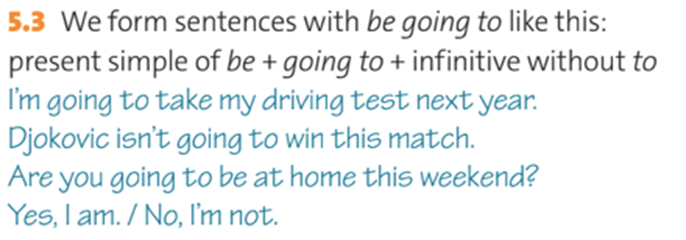
Đặt câu với be going to: thì hiện tại đơn của be + going to + V nguyên thể

Tôi sắp thi lái xe vào năm sau.

Djokovic sẽ không thắng trận này.

Bạn có định ở nhà vào cuối tuần này không?

Có, tôi có định. / Không, tôi không định.
CÂU HỎI HOT CÙNG CHỦ ĐỀ

Câu 1:

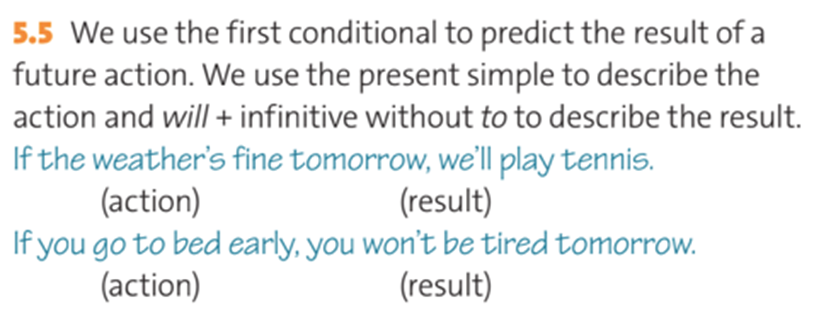
We use the first conditional to predict the result of a future action. We use the present simple to describe the action and will + infitive  (ảnh 1)

Xem đáp án » 17/06/2026 198

Câu 2:

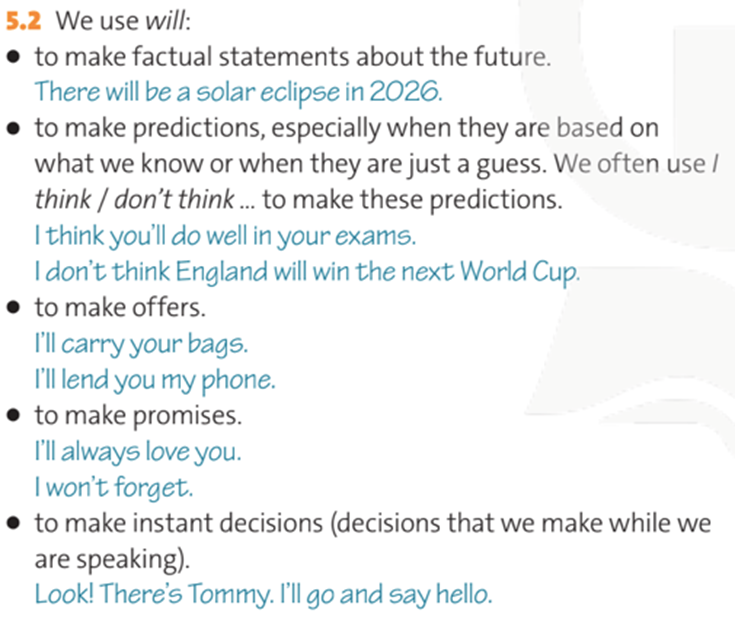
We use will: to make factual statements about the future. There will be a solar eclipse in 2026 (ảnh 1)

Xem đáp án » 17/06/2026 171

Câu 3:

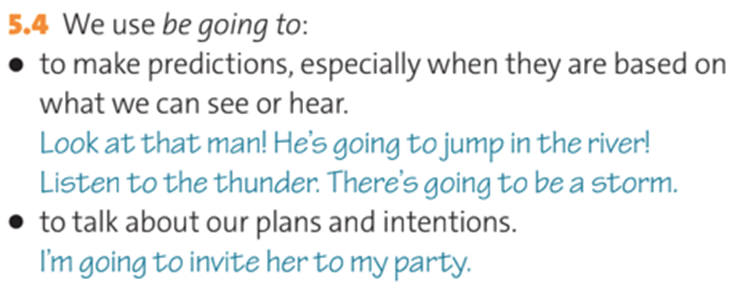
We use be going to: to make predictions, especially when they are based on what we can see or hear (ảnh 1)

Xem đáp án » 17/06/2026 150

Câu 4:

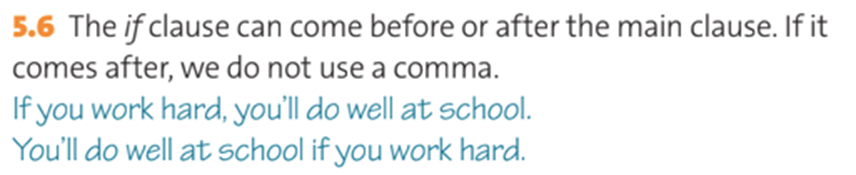
The if clause can come before or after the main clause. If it comes after, we do not use a comma. If you work hard, you'll do well at school. (ảnh 1)

Xem đáp án » 17/06/2026 143

Câu 5:

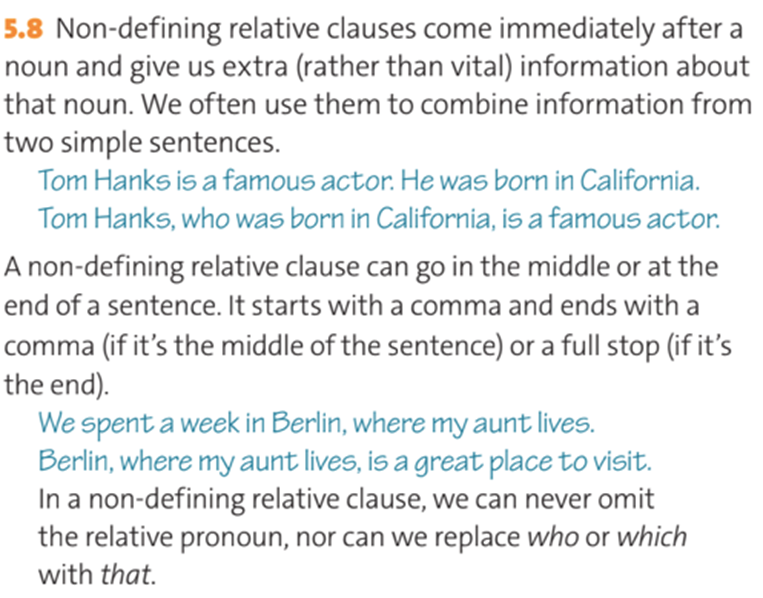
Non-defining relative clauses come immediately after a noun and give us extra (rather than vital) information about that noun. (ảnh 1)

Xem đáp án » 17/06/2026 139

Câu 6:

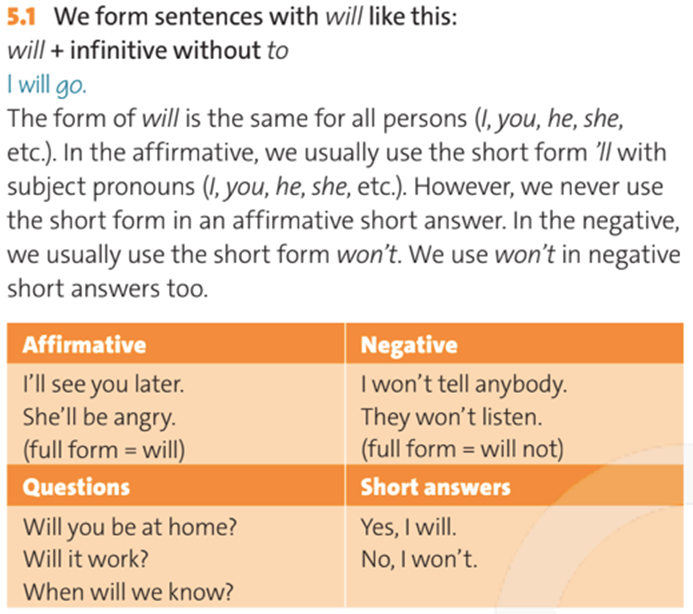
We form sentences with will like this will + infinitive  without to I will go The form of will is the same for all persons (I, you, he, she, etc.) (ảnh 1)

Xem đáp án » 17/06/2026 137

Câu 7:

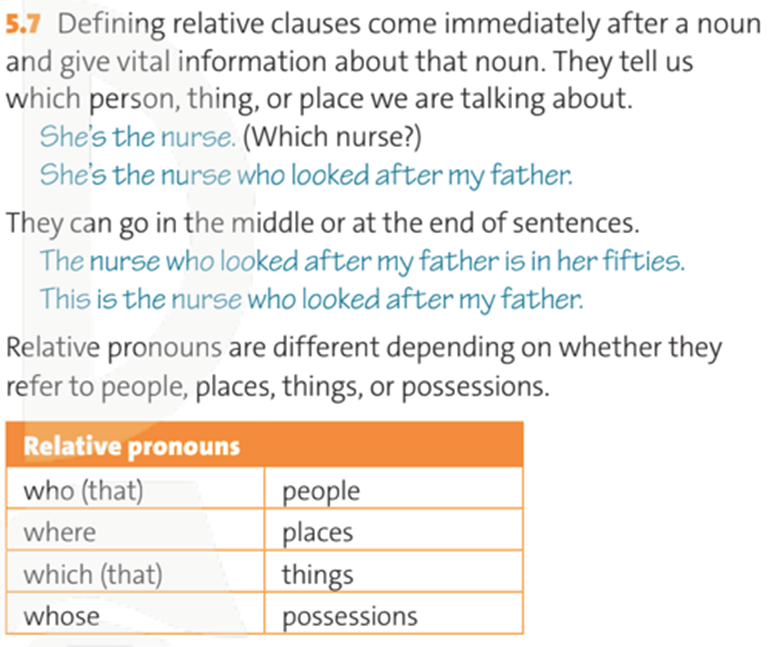
Defining relative clauses come immediately after a noun and give vital information about that noun. They tell us which person, thing, or place (ảnh 1)

Xem đáp án » 17/06/2026 130