Trả lời:
 Giải bởi Vietjack
Hướng dẫn dịch:
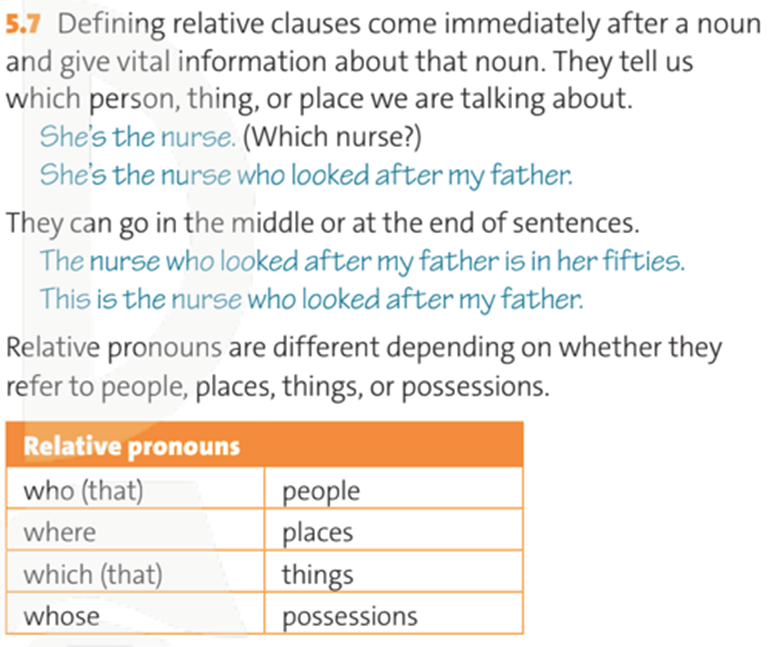
- Mệnh đề quan hệ xác định đứng ngay sau một danh từ và cung cấp thông tin quan trọng về danh từ đó. Chúng cho ta biết về người, sự vật hoặc địa điểm mà chúng ta đang nói đến.
Cô ấy là y tá. (Y tá nào?)
Cô ấy là y tá chăm sóc cha tôi.
- Chúng có thể đứng ở giữa hoặc cuối câu.
Cô y tá đã chăm sóc cha tôi ở độ tuổi năm mươi.
Đây là y tá đã chăm sóc cha tôi.
- Các đại từ quan hệ khác nhau dùng để chỉ người, địa điểm, sự vật hoặc tài sản.
who (that) (người)
where (địa điểm)
which (that) (vật)
whose (sở hữu)
Hướng dẫn dịch:
- Mệnh đề quan hệ xác định đứng ngay sau một danh từ và cung cấp thông tin quan trọng về danh từ đó. Chúng cho ta biết về người, sự vật hoặc địa điểm mà chúng ta đang nói đến.
Cô ấy là y tá. (Y tá nào?)
Cô ấy là y tá chăm sóc cha tôi.
- Chúng có thể đứng ở giữa hoặc cuối câu.
Cô y tá đã chăm sóc cha tôi ở độ tuổi năm mươi.
Đây là y tá đã chăm sóc cha tôi.
- Các đại từ quan hệ khác nhau dùng để chỉ người, địa điểm, sự vật hoặc tài sản.
who (that) (người)
where (địa điểm)
which (that) (vật)
whose (sở hữu)