 Tìm kiếm
Chương I Luật Công an nhân dân 2018: Quy định chung
| Số hiệu: | 37/2018/QH14 | Loại văn bản: | Luật |
| Nơi ban hành: | Quốc hội | Người ký: | Nguyễn Thị Kim Ngân |
| Ngày ban hành: | 20/11/2018 | Ngày hiệu lực: | 01/07/2019 |
| Ngày công báo: | 23/12/2018 | Số công báo: | Từ số 1137 đến số 1138 |
| Lĩnh vực: | Bộ máy hành chính | Tình trạng: | Còn hiệu lực |
TÓM TẮT VĂN BẢN
Rút ngắn thời hạn thực hiện nghĩa vụ CAND xuống còn 24 tháng
Đây là nội dung nổi bật tại Luật Công an nhân dân 2018 được Quốc hội khóa XIV thông qua tại kỳ họp thứ 6, ngày 20/11/2018.
Theo đó, thời hạn thực hiện nghĩa vụ tham gia CAND là 24 tháng (02 năm) thay vì là 36 tháng (03 năm) như tại Luật Công an nhân dân 2014.
Bộ trưởng Bộ Công an quyết định kéo dài thời hạn phục vụ tại ngũ của hạ sĩ quan, chiến sĩ nghĩa vụ nhưng không quá 06 tháng trong trường hợp sau đây:
- Để bảo đảm nhiệm vụ sẵn sàng chiến đấu;
- Đang thực hiện nhiệm vụ phòng, chống thiên tai, dịch bệnh, cứu nạn, cứu hộ.
Công dân được tuyển chọn vào CAND cần:
- Đáp ứng tiêu chuẩn về chính trị, phẩm chất đạo đức, trình độ, sức khỏe, độ tuổi và năng khiếu phù hợp với công tác công an;
- Có nguyện vọng và CAND có nhu cầu.
Luật Công an nhân dân 2018 có hiệu lực từ ngày 01/7/2019, riêng các quy định sau sẽ có hiệu lực từ ngày 11/01/2019:
- Các quy định của Luật này về cấp bậc hàm cao nhất là cấp tướng; phong, thăng, giáng, tước cấp bậc hàm cấp tướng;- Các quy định của Luật này về bổ nhiệm, miễn nhiệm, cách chức, giáng chức các chức vụ có cấp bậc hàm cao nhất là cấp tướng.
Văn bản tiếng việt
 Luật Công an nhân dân 2018 (Bản Pdf)
 Luật Công an nhân dân 2018 (Bản Word)
Văn bản tiếng anh
Luật này quy định về nguyên tắc tổ chức, hoạt động; vị trí, chức năng, nhiệm vụ, quyền hạn; bảo đảm điều kiện hoạt động, chế độ, chính sách đối với Công an nhân dân; trách nhiệm của cơ quan, tổ chức, cá nhân có liên quan.
Trong Luật này, các từ ngữ dưới đây được hiểu như sau:
1. Bảo vệ an ninh quốc gia là phòng ngừa, phát hiện, ngăn chặn, đấu tranh làm thất bại hoạt động xâm phạm an ninh quốc gia và loại trừ nguy cơ đe dọa an ninh quốc gia.
2. Bảo đảm trật tự, an toàn xã hội là phòng ngừa, phát hiện, ngăn chặn, đấu tranh chống tội phạm và vi phạm pháp luật về trật tự, an toàn xã hội.
3. Sĩ quan, hạ sĩ quan nghiệp vụ là công dân Việt Nam được tuyển chọn, đào tạo, huấn luyện và hoạt động trong lĩnh vực nghiệp vụ của Công an nhân dân, được phong, thăng cấp bậc hàm cấp tướng, cấp tá, cấp úy, hạ sĩ quan.
4. Sĩ quan, hạ sĩ quan chuyên môn kỹ thuật là công dân Việt Nam được tuyển chọn, hoạt động trong lĩnh vực chuyên môn kỹ thuật của Công an nhân dân, được phong, thăng cấp bậc hàm cấp tá, cấp úy, hạ sĩ quan.
5. Hạ sĩ quan, chiến sĩ nghĩa vụ là công dân Việt Nam thực hiện nghĩa vụ tham gia Công an nhân dân, được phong, thăng cấp bậc hàm Thượng sĩ, Trung sĩ, Hạ sĩ, Binh nhất, Binh nhì.
6. Công nhân công an là công dân Việt Nam có trình độ chuyên môn kỹ thuật, được tuyển dụng vào làm việc trong Công an nhân dân mà không thuộc diện được phong cấp bậc hàm sĩ quan, hạ sĩ quan, chiến sĩ.
Công an nhân dân là lực lượng vũ trang nhân dân làm nòng cốt trong thực hiện nhiệm vụ bảo vệ an ninh quốc gia, bảo đảm trật tự, an toàn xã hội, đấu tranh phòng, chống tội phạm và vi phạm pháp luật về an ninh quốc gia, trật tự, an toàn xã hội.
1. Đặt dưới sự lãnh đạo tuyệt đối, trực tiếp về mọi mặt của Đảng Cộng sản Việt Nam, sự thống lĩnh của Chủ tịch nước, sự thống nhất quản lý nhà nước của Chính phủ và sự chỉ huy, quản lý trực tiếp của Bộ trưởng Bộ Công an.
2. Được tổ chức tập trung, thống nhất, chuyên sâu, tinh gọn và theo cấp hành chính từ trung ương đến cơ sở.
3. Tuân thủ Hiến pháp và pháp luật; cấp dưới phục tùng cấp trên; dựa vào Nhân dân và chịu sự giám sát của Nhân dân; bảo vệ lợi ích của Nhà nước, quyền và lợi ích hợp pháp của tổ chức, cá nhân.
1. Nhà nước xây dựng Công an nhân dân cách mạng, chính quy, tinh nhuệ, từng bước hiện đại; ưu tiên hiện đại hóa một số lực lượng.
2. Cơ quan, tổ chức và công dân có trách nhiệm tham gia xây dựng Công an nhân dân trong sạch, vững mạnh.
Ngày 19 tháng 8 hằng năm là ngày truyền thống của Công an nhân dân và là ngày hội “Toàn dân bảo vệ an ninh Tổ quốc”.
1. Công dân có đủ tiêu chuẩn về chính trị, phẩm chất đạo đức, trình độ, sức khỏe, độ tuổi và năng khiếu phù hợp với công tác công an, có nguyện vọng và Công an nhân dân có nhu cầu thì có thể được tuyển chọn vào Công an nhân dân.
2. Công an nhân dân được ưu tiên tuyển chọn sinh viên, học sinh xuất sắc tốt nghiệp ở các cơ sở giáo dục đại học, cơ sở giáo dục nghề nghiệp có đủ tiêu chuẩn để đào tạo, bổ sung vào Công an nhân dân.
3. Bộ trưởng Bộ Công an quy định chi tiết Điều này.
1. Công dân thực hiện nghĩa vụ tham gia Công an nhân dân là thực hiện nghĩa vụ bảo vệ Tổ quốc trong lực lượng vũ trang nhân dân. Hằng năm, Công an nhân dân được tuyển chọn công dân trong độ tuổi gọi nhập ngũ vào phục vụ trong Công an nhân dân với thời hạn là 24 tháng. Bộ trưởng Bộ Công an quyết định kéo dài thời hạn phục vụ tại ngũ của hạ sĩ quan, chiến sĩ nghĩa vụ nhưng không quá 06 tháng trong trường hợp sau đây:
a) Để bảo đảm nhiệm vụ sẵn sàng chiến đấu;
b) Đang thực hiện nhiệm vụ phòng, chống thiên tai, dịch bệnh, cứu nạn, cứu hộ.
2. Thủ tục tuyển chọn công dân thực hiện nghĩa vụ tham gia Công an nhân dân được áp dụng như tuyển chọn công dân thực hiện nghĩa vụ quân sự tại ngũ.
3. Chính phủ quy định chi tiết khoản 2 Điều này.
1. Sĩ quan Công an nhân dân phục vụ theo chế độ chuyên nghiệp; hạ sĩ quan, chiến sĩ Công an nhân dân phục vụ theo chế độ chuyên nghiệp hoặc chế độ nghĩa vụ; công nhân công an phục vụ theo chế độ tuyển dụng.
2. Công dân thôi phục vụ trong Công an nhân dân phải thực hiện nghĩa vụ quân sự trong ngạch dự bị theo quy định của pháp luật.
1. Quốc hội, Ủy ban Thường vụ Quốc hội, Hội đồng Dân tộc, Ủy ban của Quốc hội, Đoàn đại biểu Quốc hội, đại biểu Quốc hội, Hội đồng nhân dân, Thường trực Hội đồng nhân dân, Ban của Hội đồng nhân dân, Tổ đại biểu Hội đồng nhân dân và đại biểu Hội đồng nhân dân, trong phạm vi nhiệm vụ, quyền hạn của mình, thực hiện giám sát hoạt động của Công an nhân dân.
2. Mặt trận Tổ quốc Việt Nam và các tổ chức thành viên của Mặt trận, trong phạm vi nhiệm vụ, quyền hạn của mình, có trách nhiệm tuyên truyền, vận động mọi tầng lớp nhân dân tham gia phong trào toàn dân bảo vệ an ninh Tổ quốc, phối hợp, cộng tác, hỗ trợ Công an nhân dân thực hiện nhiệm vụ và xây dựng Công an nhân dân, giám sát việc thực hiện pháp luật về Công an nhân dân.
Quân đội nhân dân, Dân quân tự vệ có trách nhiệm phối hợp chặt chẽ với Công an nhân dân để bảo vệ an ninh quốc gia, bảo đảm trật tự, an toàn xã hội, đấu tranh phòng, chống tội phạm, vi phạm pháp luật về an ninh quốc gia, trật tự, an toàn xã hội và xây dựng Công an nhân dân.
Chính phủ quy định chi tiết Điều này.
1. Chính phủ thống nhất quản lý nhà nước về bảo vệ an ninh quốc gia, bảo đảm trật tự, an toàn xã hội, đấu tranh phòng, chống tội phạm, vi phạm pháp luật và xây dựng Công an nhân dân; thực hiện nhiệm vụ, quyền hạn theo quy định của Hiến pháp và pháp luật có liên quan.
2. Bộ Công an chịu trách nhiệm trước Chính phủ thực hiện quản lý nhà nước về bảo vệ an ninh quốc gia, bảo đảm trật tự, an toàn xã hội, đấu tranh phòng, chống tội phạm, vi phạm pháp luật về an ninh quốc gia, trật tự, an toàn xã hội và xây dựng Công an nhân dân.
3. Bộ, ngành trung ương, trong phạm vi nhiệm vụ, quyền hạn của mình, có trách nhiệm phối hợp với Bộ Công an trong thực hiện quản lý nhà nước về bảo vệ an ninh quốc gia, bảo đảm trật tự, an toàn xã hội, đấu tranh phòng, chống tội phạm, vi phạm pháp luật về an ninh quốc gia, trật tự, an toàn xã hội, xây dựng Công an nhân dân và có nhiệm vụ, quyền hạn sau đây:
a) Ban hành hoặc trình cấp có thẩm quyền ban hành văn bản quy phạm pháp luật, văn bản chỉ đạo, hướng dẫn để thực hiện nhiệm vụ theo quy định của Luật này và quy định khác của pháp luật có liên quan;
b) Phối hợp với Bộ Công an tổ chức thực hiện chiến lược, quy hoạch, kế hoạch nhà nước, chương trình mục tiêu quốc gia, đề án về an ninh, trật tự theo nhiệm vụ được giao;
c) Chủ trì, phối hợp với Bộ Công an và cơ quan, tổ chức có liên quan thực hiện việc kết hợp chặt chẽ kinh tế - xã hội, quốc phòng, đối ngoại với an ninh trong xây dựng và thực hiện quy hoạch, kế hoạch, chương trình mục tiêu quốc gia, đề án của ngành, lĩnh vực được giao phụ trách phù hợp với chiến lược bảo vệ an ninh quốc gia, bảo đảm trật tự, an toàn xã hội và xây dựng Công an nhân dân;
d) Tham gia xây dựng nền an ninh nhân dân, thế trận an ninh nhân dân gắn với nền quốc phòng toàn dân, thế trận quốc phòng toàn dân, xây dựng lực lượng vũ trang nhân dân theo quy định của pháp luật và sự chỉ đạo, hướng dẫn của cấp có thẩm quyền;
đ) Chủ trì hoặc phối hợp với Bộ Công an định kỳ hoặc đột xuất tiến hành công tác kiểm tra, thanh tra, sơ kết, tổng kết thực hiện nhiệm vụ bảo vệ an ninh, trật tự theo thẩm quyền;
e) Thực hiện nhiệm vụ, quyền hạn khác về bảo vệ an ninh quốc gia, bảo đảm trật tự, an toàn xã hội theo quy định của pháp luật.
1. Hội đồng nhân dân các cấp, trong phạm vi nhiệm vụ, quyền hạn của mình, có trách nhiệm sau đây:
a) Quyết định biện pháp bảo đảm thực hiện nhiệm vụ bảo vệ an ninh quốc gia, bảo đảm trật tự, an toàn xã hội theo quy định của pháp luật;
b) Quyết định chủ trương, phương hướng nhằm phát huy tiềm năng của địa phương để xây dựng nền an ninh nhân dân, thế trận an ninh nhân dân gắn với nền quốc phòng toàn dân, thế trận quốc phòng toàn dân vững mạnh, xây dựng tiềm lực bảo vệ an ninh quốc gia, bảo đảm trật tự, an toàn xã hội;
c) Quyết định chủ trương, phương hướng xây dựng các tổ chức quần chúng tham gia bảo vệ an ninh, trật tự tại cơ sở; quyết định chủ trương, biện pháp kết hợp chặt chẽ giữa củng cố, tăng cường an ninh với phát triển kinh tế - xã hội; giữa phát triển kinh tế - xã hội với củng cố, tăng cường an ninh; kết hợp an ninh với quốc phòng, đối ngoại của địa phương;
d) Quyết định ngân sách bảo đảm thực hiện nhiệm vụ bảo vệ an ninh quốc gia, bảo đảm trật tự, an toàn xã hội của địa phương;
đ) Giám sát việc tuân theo Hiến pháp, pháp luật và thực hiện nghị quyết của Hội đồng nhân dân về bảo vệ an ninh quốc gia, bảo đảm trật tự, an toàn xã hội ở địa phương;
e) Thực hiện nhiệm vụ, quyền hạn khác về bảo vệ an ninh quốc gia, bảo đảm trật tự, an toàn xã hội theo quy định của pháp luật.
2. Ủy ban nhân dân các cấp, trong phạm vi nhiệm vụ, quyền hạn của mình, có trách nhiệm sau đây:
a) Ban hành văn bản quy phạm pháp luật thuộc thẩm quyền để tổ chức thực hiện nhiệm vụ bảo vệ an ninh quốc gia, bảo đảm trật tự, an toàn xã hội theo quy định của pháp luật, nghị quyết của Hội đồng nhân dân cùng cấp và các nhiệm vụ bảo vệ an ninh quốc gia, bảo đảm trật tự, an toàn xã hội do cấp có thẩm quyền giao; thực hiện quản lý nhà nước về bảo vệ an ninh quốc gia, bảo đảm trật tự, an toàn xã hội ở địa phương;
b) Chỉ đạo và tổ chức thực hiện xây dựng nền an ninh nhân dân, thế trận an ninh nhân dân gắn với nền quốc phòng toàn dân, thế trận quốc phòng toàn dân vững mạnh, xây dựng tiềm lực bảo vệ an ninh quốc gia, bảo đảm trật tự, an toàn xã hội; thực hiện giáo dục quốc phòng và an ninh ở địa phương;
c) Trình Hội đồng nhân dân cùng cấp dự toán ngân sách bảo đảm thực hiện nhiệm vụ bảo vệ an ninh quốc gia, bảo đảm trật tự, an toàn xã hội; chỉ đạo và tổ chức thực hiện nghị quyết của Hội đồng nhân dân cùng cấp về ngân sách bảo đảm thực hiện nhiệm vụ bảo vệ an ninh quốc gia, bảo đảm trật tự, an toàn xã hội của địa phương;
d) Chỉ đạo các cơ quan phối hợp với Công an nhân dân thực hiện nhiệm vụ bảo vệ an ninh quốc gia, bảo đảm trật tự, an toàn xã hội ở địa phương, tham gia xây dựng Công an nhân dân, bảo đảm chế độ, chính sách đối với Công an nhân dân và các tổ chức quần chúng tham gia bảo vệ an ninh, trật tự tại cơ sở; chủ trì hoặc phối hợp xây dựng, quản lý, bảo vệ công trình quan trọng liên quan đến an ninh quốc gia trên địa bàn;
đ) Phối hợp với Mặt trận Tổ quốc Việt Nam và các tổ chức thành viên của Mặt trận, cơ quan, tổ chức có liên quan trong việc thực hiện nhiệm vụ bảo vệ an ninh quốc gia, bảo đảm trật tự, an toàn xã hội và tham gia xây dựng Công an nhân dân ở địa phương;
e) Tổ chức việc kiểm tra, thanh tra, giải quyết khiếu nại, tố cáo, xử lý vi phạm pháp luật, sơ kết, tổng kết, thi đua, khen thưởng trong thực hiện nhiệm vụ bảo vệ an ninh quốc gia, bảo đảm trật tự, an toàn xã hội và xây dựng Công an nhân dân ở địa phương;
g) Thực hiện nhiệm vụ, quyền hạn khác về bảo vệ an ninh quốc gia, bảo đảm trật tự, an toàn xã hội theo quy định của pháp luật.
1. Cơ quan, tổ chức, cá nhân hoạt động trên lãnh thổ nước Cộng hòa xã hội chủ nghĩa Việt Nam và cơ quan, tổ chức, công dân Việt Nam ở nước ngoài có trách nhiệm tham gia, phối hợp, cộng tác, hỗ trợ Công an nhân dân thực hiện chức năng, nhiệm vụ và quyền hạn theo quy định của pháp luật.
2. Cơ quan, tổ chức, cá nhân tham gia, phối hợp, cộng tác, hỗ trợ Công an nhân dân trong bảo vệ an ninh quốc gia, bảo đảm trật tự, an toàn xã hội, đấu tranh phòng, chống tội phạm và vi phạm pháp luật được bảo vệ, giữ bí mật theo quy định của pháp luật.
3. Cơ quan, tổ chức, cá nhân tham gia, phối hợp, cộng tác, hỗ trợ Công an nhân dân trong bảo vệ an ninh quốc gia, bảo đảm trật tự, an toàn xã hội, đấu tranh phòng, chống tội phạm và vi phạm pháp luật có thành tích thì được khen thưởng; bị tổn hại về danh dự thì được khôi phục, bị thiệt hại về tài sản thì được đền bù; người bị thương tích, tổn hại về sức khỏe, tính mạng thì bản thân, gia đình được hưởng chế độ, chính sách theo quy định của pháp luật.
GENERAL PROVISIONS
This Law provides for the principles of organization and operation; positions, functions, duties and powers; assurance of operational conditions, regimes and policies for the People's Public Security Force; responsibilities of relevant entities and persons.
For the purposes of this Law, terms used herein shall be construed as follows:
1. National security protection means preventing, detecting, controlling and fighting the infringement upon national security, and eliminating the threat of national security.
2. Guarantee of social order and safety means preventing, detecting, controlling and combating crimes and violations of law on social order and safety.
3. Operational officer or non-commissioned officer means a Vietnamese citizen who is recruited, trained, coached and works in different operation fields of the People’s Public Security Force, and is bestowed and promoted to the rank of general, field officer, company officer or non-commissioned officer.
4. Specialist and technical officer or non-commissioned officer means a Vietnamese citizen who is recruited, works in different technical fields of the People’s Public Security Force, and is bestowed and promoted to the rank of field officer, company officer or non-commissioned officer.
5. Non-commissioned officer or conscript means a Vietnamese citizen who is conscripted to join the People’s Public Security Force, is bestowed and promoted to the rank of sergeant-major, sergeant, corporal, first-class private or private.
6. Public security worker means a Vietnamese citizen who has professional and technical qualifications, is recruited to the People’s Public Security Force but is not permissible to be bestowed to the rank of officer, non-commissioned officer or serviceman.
Article 3. Position of the People’s Public Security Force
The People’s Public Security Force shall be designated as the core of the people’s armed forces in performing duties to protect national security and maintain social order and safety, and fight for prevention and control of crimes or violations of law on national security, order or social safety.
Article 4. Principles of organization and operation of the People’s Public Security Force
1. Be put under the ultimate and direct leadership of the Communist Party of Vietnam in all aspects, the domination of the State President, the unified State management of the Government and the direct command and administration of the Minister of Public Security.
2. Be organized in a centralized and uniform manner and according to the administrative hierarchy from the central to grassroots levels.
3. Abide by the Constitution and law; the subordinates shall submit to the superiors; they shall rely on the People and be subject to the supervision by the People; protect the interests of the State, and the lawful rights and interests of organizations and individuals.
Article 5. Building of the People’s Public Security Force
1. The State shall build People’s Public Security Force to become revolutionary, regular, elite and gradually modernized; prioritize the modernization of certain forces.
2. Entities and citizens shall be held responsible for getting involved in building the immaculate and powerful People's Public Security Force.
Article 6. Traditional day of the People’s Public Security Force
The 19th day of August every year shall be selected as the annual traditional day of the People's Public Security Force and the All-people National Defense's Day.
Article 7. Recruitment of citizens into the People’s Public Security Force
1. Citizens who fully meet the criteria on political and moral qualities, educational level and health, reach legitimate age and have proper aptitudes for public-security activities, have aspirations to join the People’s Public Security Force may be recruited into the People’s Public Security Force upon the demand of the People’s Public Security Force.
2. The People’s Public Security Force shall be given priority in recruiting outstanding cadets graduating from higher education establishments and vocational training centers who are fully eligible to be trained to join the People’s Public Security Force.
3. The Minister of Public Security shall provide specific provisions of this Article.
Article 8. Obligation to join the People’s Public Security Force
1. A citizen’s fulfillment of the obligation to join the People’s Public Security Force means that he/she has performed their obligation to defend the Fatherland during his/her service in the people’s armed force. Annually, the People’s Public Security Force may recruit citizens within age for service into the People’s Public Security Force for a period of 24 months. The Minister of Public Security shall be accorded authority to extend the period of service of non-commissioned officers and conscripts to no more than 06 months in the following cases:
a) Extension of the period of service serves the purpose of being ready to fight;
b) Extension of the period of service may be granted if they are performing natural disaster or epidemic prevention and control or rescue tasks.
2. The procedures for recruitment of eligible citizens into the People’s Public Security shall be similar to the procedures for recruitment of citizens eligible to perform active military duty.
3. The Government shall elaborate on clause 2 of this Article.
Article 9. Service regimes applicable to officers, non-commissioned officers and conscripts of the People’s Public Security Force and public-security workers
1. People’s Public Security officers shall serve under the professional regime; noncommissioned officers and conscripts shall serve under the professional regime or service regime; public-security workers shall serve under the recruitment regime.
2. After being discharged from the People’s Public Security Force, persons who have served in the People’s Public Security Force shall perform military duty as holders of reserve titles as per law.
Article 10. Supervision of activities of the People’s Public Security Force
1. The National Assembly, National Assembly’s Standing Committee, Ethnic Council, delegations of National Assembly deputies, National Assembly deputies, People’s Councils and People’s Council’s Standing Committees, People’s Council’s Committees, delegations of People’s Council’s deputies and People’s Council’s deputies shall, within the scope of their respective tasks and powers, supervise the activities of the People’s Public Security Force.
2. The Vietnam Fatherland Front and its member organizations shall, within their duties and powers, propagate and mobilize people from all social strata to participate in the “All People Protect the National Security” movement, cooperate and collaborate with and assist the People’s Public Security Force in performing their tasks and building the People’s Public Security Force, and supervising the implementation of the law on the People’s Public Security.
Article 11. Coordination between the People’s Army, the Militia and Self-Defense Force and the People’s Public Security Force
The People’s Army and the Militia and Self-Defense Force shall closely cooperate with the People’s Public Security Force in protecting the national security, maintaining the social order and safety, preventing, controlling and fighting crimes or violations of law on national security, social order and safety, and building the People’s Public Security Force.
The Government shall issue specific provisions of this Article.
Article 12. Responsibilities of the Government, ministries and central administrations for protection of national security protection, maintenance of social order and safety, combat against, prevention and control of crimes and violations of laws and building of the People’s Public Security Force
1. The Government shall be responsible for carrying out the uniform state management of protection of national security, maintenance of social order and safety, combat against, prevention and control of crimes and violations of law, and construction of the People's Public Security Force; implementing its duties and powers under the provisions of the Constitution and relevant laws.
2. The Ministry of Public Security shall be held accountable to the Government for the state management of protection of national security, maintenance of social order and safety, combat against, prevention and control of crimes and violations of law, and construction of the People's Public Security Force.
3. Ministries and central administrations shall, within their duties and powers, assume responsibility to cooperate with the Ministry of Public Security in the state management of protection of national security, maintenance of social order and safety, combat against, prevention and control of crimes and violations of law, and construction of the People's Public Security Force, and implement the following duties and powers:
a) Promulgate or submit to competent authorities for promulgation of legislative documents, directives and instructional documents on the implementation of tasks prescribed in this Law and other relevant law provisions;
b) Cooperate with the Ministry of Public Security in organizing the implementation of state strategies, planning schemes, plans, national target programs, security and order proposals according to their assigned tasks;
c) Preside over and cooperate with the Ministry of Public Security and the concerned agencies and organizations in closely connect socio-economic, defense and foreign relation development tasks with security ones in the process of developing and implementing planning schemes, plans, national target programs and projects in the industries and domains under their delegated authority to ensure they are in line with the strategies for protection of national security, maintenance of social order and safety and building of the People's Public Security Force;
d) Participate in the building of the all-people security system and the people’s security posture associated with the all-people national defense and the all-people national defense posture, and the building of the people's armed forces under the provisions of law, directions and instructions given by competent authorities;
dd) Preside over or cooperate with the Ministry of Public Security on a regular or irregular inspection, audit, preliminary and final review of the implementation of security and order protection tasks under their authority;
e) Implement other tasks and powers regarding protection of national security, maintenance of social order and safety according to law provisions.
Article 13. Responsibilities of People's Councils and People's Committees at all levels for the protection of national security, the maintenance of social order and safety and the building of the People’s Public Security Force
1. People’s Councils at all levels shall, within their duties and powers, have the following responsibilities:
a) Decide on measures to ensure the fulfillment of the tasks of protecting national security, maintaining social order and safety according to law provisions;
b) Decide on policies and guidelines for promotion of the potentialities of their localities in building the people’s security system and the people’s security posture associated with reinforcement of the all-people national defence and the all-people national defence posture, and building of potentialities for protection of national security and maintenance of social security and safety;
c) Decide on policies and guidelines for building of mass organizations involved in protection of security and order at the grassroots level; decide on policies and measures to closely combine reinforcement and promotion of security with socio-economic development; closely combine socio-economic development with reinforcement and promotion of security; closely combine security with national defence and foreign relation within their localities;
d) Decide on the state budget expenditures on assurance of fulfillment of duties to protect national security, maintain social order and safety within their localities;
dd) Supervise the compliance with the Constitution and laws, and the implementation of resolutions of the People's Councils on protection of national security, maintenance of social order and safety in their respective localities;
e) Implement other tasks and powers regarding protection of national security, maintenance of social order and safety according to law provisions.
2. People’s Committees at all levels shall, within their duties and powers, have the following responsibilities:
a) Promulgate legislative documents under its competence to undertake the tasks of protection of national security, maintenance of social order and safety under law provisions and resolutions of the same-level People's Councils, and tasks of protection of national security, maintenance of social order and safety which are assigned by competent authorities; carry out the state management of protection of national security, maintenance of social order and safety within their respective localities;
b) Direct and undertake the building of the people’s security system and the people’s security posture associated with reinforcement of the all-people national defence and the all-people national defence posture, and the building of potentialities for protection of national security and maintenance of social security and safety; perform the tasks of educating national defence and security in their respective localities;
c) Submit to the People's Council at the same level the budget estimates for fulfillment of the tasks of protection of national security, maintenance social order and safety; direct and organize the implementation of the resolutions of the People's Councils at the same level on the state budget allocations for fulfillment of the tasks of protection of national security, maintenance of social order and safety in their respective localities;
d) Direct relevant agencies to cooperate with the People's Public Security Force in performing the tasks of protecting national security, maintaining social order and safety in their respective localities, participating in the building of the People's Public Security Force, maintenance of the regimes and policies for the People's Public Security Force and mass organizations participating in the protection of grassroots-level security and order; preside over or cooperate in the building, management and protection of important projects related to national security within their respective localities;
dd) Cooperate with the Vietnam Fatherland Front and its member organizations, relevant agencies and organizations in performing the tasks of protection of national security, maintenance of social order and safety, and engaging in the building of the People’s Public Security Force within their respective localities;
e) Organize the inspection, audit and resolution of complaints, denunciations and the handling of violations of law, preliminary and final review, emulation and rewarding related to implementation of the tasks of protection of national security, maintenance of social order and safety, and building of the People's Public Security Force in their respective localities;
g) Implement other tasks and powers regarding protection of national security, maintenance of social order and safety according to law provisions.
Article 14. Responsibilities of, regimes and policies for entities and persons participating in, cooperating, collaborating with and supporting the People’s Public Security Force
1. Agencies, organizations and individuals operating within the territory of the Socialist Republic of Vietnam and overseas Vietnamese agencies, organizations and citizens shall have the responsibility to participate in, cooperate and collaborate with and support the People's Public Security Force to perform their functions, duties and powers as prescribed by law.
2. Agencies, organizations and individuals that participate in, cooperate and collaborate with and support the People's Public Security Force in protecting national security, maintaining social order and safety, fighting, preventing and controlling crimes and violations of law shall be protected and prevented from being known to the public in accordance with laws.
3. If agencies, organizations and individuals that participate in, cooperate, collaborate with and support the People's Public Security Force in protecting national security, maintaining social order and safety, fighting, preventing and controlling crimes and violations of law show their excellent performance, they shall be commended and rewarded; if their honor is damaged, it will be reinstated; if their property is lost or damaged, they will be compensated; If they are injured or their health and lives are harmed, they themselves and their families shall be entitled to regimes and policies prescribed by law.
Văn bản liên quan
Cập nhật
Bài viết liên quan
10 điều kỷ luật của Công an nhân dân mới nhất 2025 gồm những gì?
10 điều kỷ luật của Công an nhân dân mới nhất 2025 gồm những gì?
Công an nhân dân là lực lượng vũ trang nhân dân làm nòng cốt trong thực hiện nhiệm vụ bảo vệ an ninh quốc gia, bảo đảm trật tự, an toàn xã hội, đấu tranh phòng, chống tội phạm và vi phạm pháp luật về an ninh quốc gia, trật tự, an toàn xã hội. 10 điều kỷ luật của Công an nhân dân sẽ được chia sẻ tại bài viết sau. 16/06/2025Lương của công an mới ra trường bao nhiêu?

Lương của công an mới ra trường bao nhiêu?
Lương của công an mới ra trường luôn là vấn đề được nhiều bạn trẻ quan tâm khi lựa chọn công việc này. Với những trách nhiệm lớn lao trong việc bảo vệ an ninh và trật tự xã hội, mức thu nhập của các cán bộ, chiến sĩ công an là yếu tố quan trọng không chỉ về tài chính mà còn ảnh hưởng đến tinh thần làm việc. Vậy, cụ thể lương của công an mới ra trường năm 2025 là bao nhiêu? 13/01/2025Bảng lương công nhân công an mới nhất 2025

Bảng lương công nhân công an mới nhất 2025
Bảng lương công nhân công an mới nhất năm 2025 đang là chủ đề được nhiều người quan tâm. Hãy cùng tìm hiểu về bảng lương công nhân công an mới nhất trong bài viết này! 13/01/2025Bảng lương chuyên môn kỹ thuật công an mới nhất 2025

Bảng lương chuyên môn kỹ thuật công an mới nhất 2025
Bảng lương chuyên môn kỹ thuật của ngành Công an năm 2025 đã có những thay đổi quan trọng, phản ánh sự phát triển của cơ cấu tổ chức và mức độ chuyên môn hóa trong lực lượng này. Với sự tăng cường đào tạo và chuyên môn hóa, mức lương sẽ được điều chỉnh để phù hợp với trách nhiệm và năng lực của từng cán bộ, chiến sĩ. 13/01/2025Bảng lương cấp bậc công an mới nhất 2025
Bảng lương cấp bậc công an mới nhất 2025
Bảng lương cấp bậc công an năm 2025 được cập nhật theo chính sách cải cách tiền lương, áp dụng theo cấp hàm và thâm niên công tác. Cùng tìm hiểu chi tiết các mức lương mới nhất trong bài viết này! 13/01/2025Đi nghĩa vụ công an 3 năm là có đúng quy định pháp luật không?
Đi nghĩa vụ công an 3 năm là có đúng quy định pháp luật không?
Thời gian tham gia nghĩa vụ công an là một trong những thắc mắc phổ biến của các bạn trẻ khi chuẩn bị thực hiện nghĩa vụ bảo vệ Tổ quốc. Thông thường, thời gian đi nghĩa vụ công an là 24 tháng (2 năm), song vẫn có những trường hợp ngoại lệ theo quy định. Vậy việc tham gia nghĩa vụ công an trong 3 năm có phù hợp với quy định pháp luật không? Bài viết dưới đây sẽ cung cấp thông tin chi tiết, dựa trên các quy định hiện hành để giúp bạn hiểu rõ hơn về vấn đề này. 02/01/2025Đi nghĩa vụ công an có được vào biên chế không?
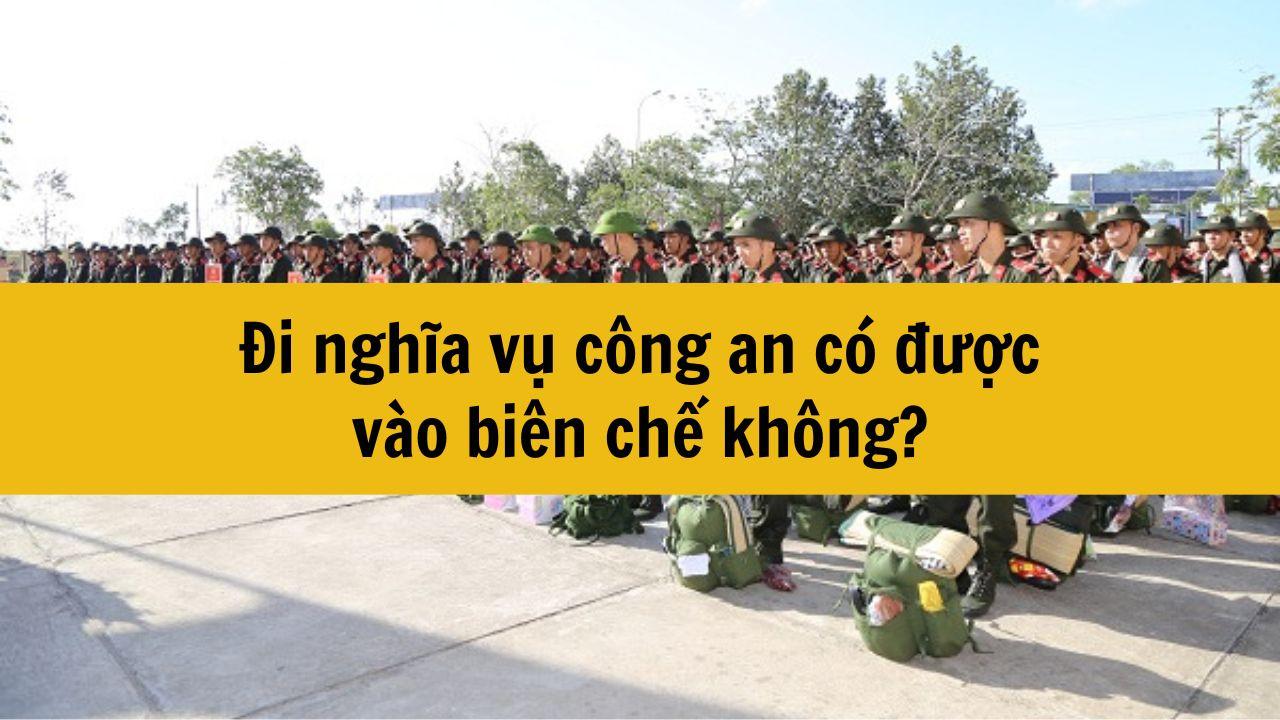
Đi nghĩa vụ công an có được vào biên chế không?
Đi nghĩa vụ công an có được vào biên chế không? Đây là câu hỏi mà nhiều bạn trẻ và gia đình quan tâm khi cân nhắc tham gia nghĩa vụ trong lực lượng Công an nhân dân. Thực tế, việc tham gia nghĩa vụ công an không chỉ là trách nhiệm với đất nước mà còn là cơ hội để nhiều người phát triển sự nghiệp trong ngành. Tuy nhiên, việc có được vào biên chế sau khi hoàn thành nghĩa vụ công an hay không phụ thuộc vào nhiều yếu tố, từ chính sách tuyển dụng đến năng lực và kết quả công tác của từng cá nhân. Hãy cùng tìm hiểu rõ hơn về vấn đề này qua bài viết dưới đây. 19/11/2024Đi nghĩa vụ công an có xét lý lịch 3 đời không?
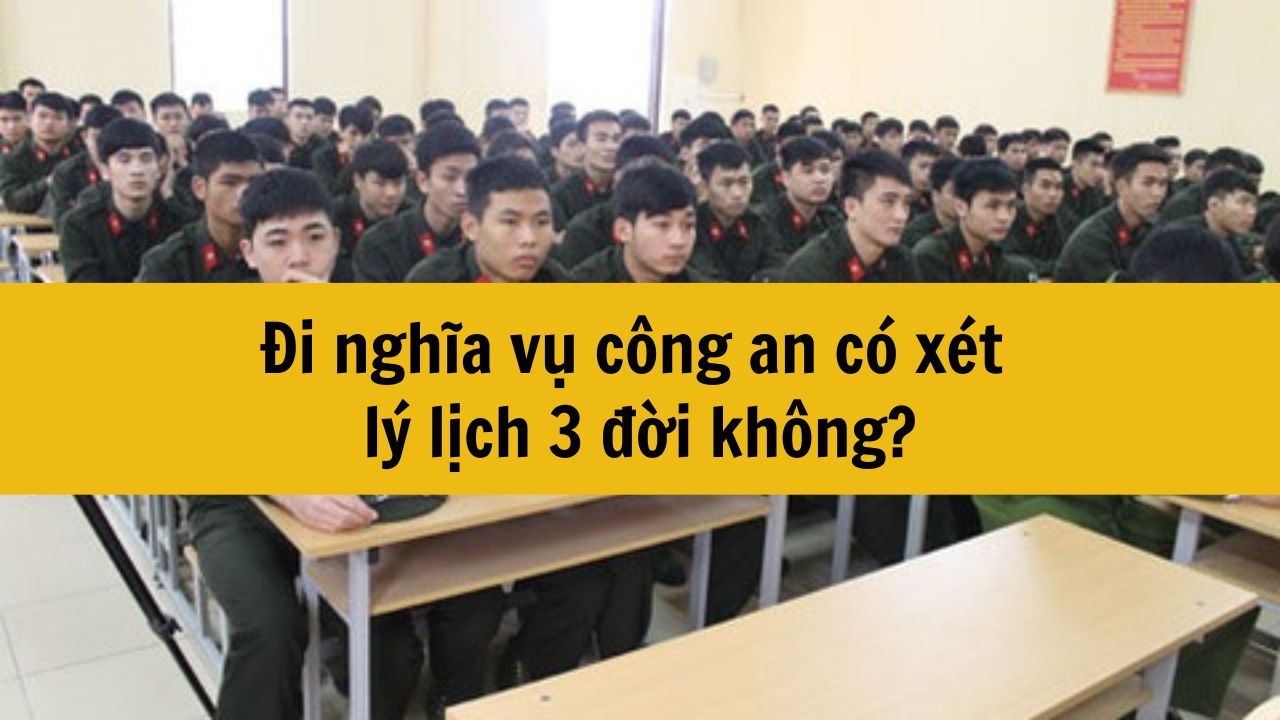
Đi nghĩa vụ công an có xét lý lịch 3 đời không?
Việc tham gia nghĩa vụ công an luôn nhận được sự quan tâm lớn từ nhiều bạn trẻ và gia đình, đặc biệt là về các tiêu chí xét tuyển. Một trong những thắc mắc phổ biến nhất là liệu khi đi nghĩa vụ công an có cần xét lý lịch 3 đời hay không. Đây là vấn đề nhạy cảm, liên quan đến các quy định pháp luật và yêu cầu đặc thù của ngành công an, đòi hỏi sự rõ ràng và minh bạch trong cách hiểu và áp dụng. 02/01/2025Đi nghĩa vụ công an có được đóng BHXH không?
Đi nghĩa vụ công an có được đóng BHXH không?
Một trong những thắc mắc phổ biến của các bạn trẻ trước khi tham gia nghĩa vụ công an là liệu quá trình này có được tính đóng bảo hiểm xã hội (BHXH) hay không. Đây là một vấn đề quan trọng, bởi thời gian tham gia nghĩa vụ không chỉ là cống hiến cho đất nước mà còn ảnh hưởng đến các quyền lợi dài hạn như hưu trí hoặc trợ cấp sau này. Trong bài viết này, chúng ta sẽ tìm hiểu cụ thể về chính sách BHXH áp dụng cho người đi nghĩa vụ công an theo quy định mới nhất. 02/01/2025Đi nghĩa vụ công an nên mang theo gì? Đi nghĩa vụ công an có được mang điện thoại không?